Scope. This checklist covers vinyl-liner pools, inground and aboveground, in climates that freeze. Fibreglass and plaster pools, and pools in climates that do not freeze, have different requirements. Where any manufacturer's instruction conflicts with a step here, follow the manufacturer.
Two to three weeks before closing
Closing a pool in poor condition guarantees opening a pool in worse condition. Spring problems are almost always autumn problems that had six months to develop.
- Test and correct the balance fully — total alkalinity first, then pH to 7.4–7.6, then calcium hardness.
- Deal with any algae, slime or mold before closing, not after. Six months under a cover in the dark is ideal conditions for all of them.
- Clean the filter chemically. A filter closed dirty is a filter that will be worse in spring.
- Shock the pool and let the sanitiser level return to normal before adding closing chemicals.
The closing sequence — all vinyl-liner pools
- Remove ladders and any deck equipment. Clean them, dry them, store them indoors. Leaving a ladder in a freezing pool damages both the ladder and the liner.
- Vacuum the pool and remove all debris. Anything organic left on the floor will spend the winter decomposing and consuming whatever sanitiser you added.
- Add the closing chemicals according to their instructions, with the pump running so they distribute before it is shut down for the season. Closing kits are concentrated and are often added in quick succession; add them one at a time, never combine them in a bucket, and follow the general storage and handling principles set out in the OSHA overview of chemical hazards.
- Clean and protect the waterline. A surface cleaner removes the oily band that would otherwise set hard over winter and become extremely difficult to shift in spring.
- Drain the filter tank of all water, and leave the winter drain plug off. This is the single most important step on the list. A filter tank with water in it will crack, and the crack will not be visible until spring.
- Put all eyeballs, drain caps, gauges and small fittings into the pump basket for safekeeping. They are small, they are all different, and they are impossible to buy individually in a hurry in May.
- Clean the filter media. DE grids and cartridges should be washed with a degreasing filter cleaner, rinsed thoroughly and stored dry.
- Bring the pump and motor indoors for the winter, having drained them of all water. Remove the drain plugs and store them with the fittings, not in the pump.
- Winterise the heater, if fitted, strictly according to the manufacturer's instructions. Failure to do so causes winter freeze damage, and a heat exchanger is among the most expensive components on a pool.
- Remove the return eyeballs and install plugs or caps in the return fittings.
- Winterise the skimmers — see the notes for your pool type below.
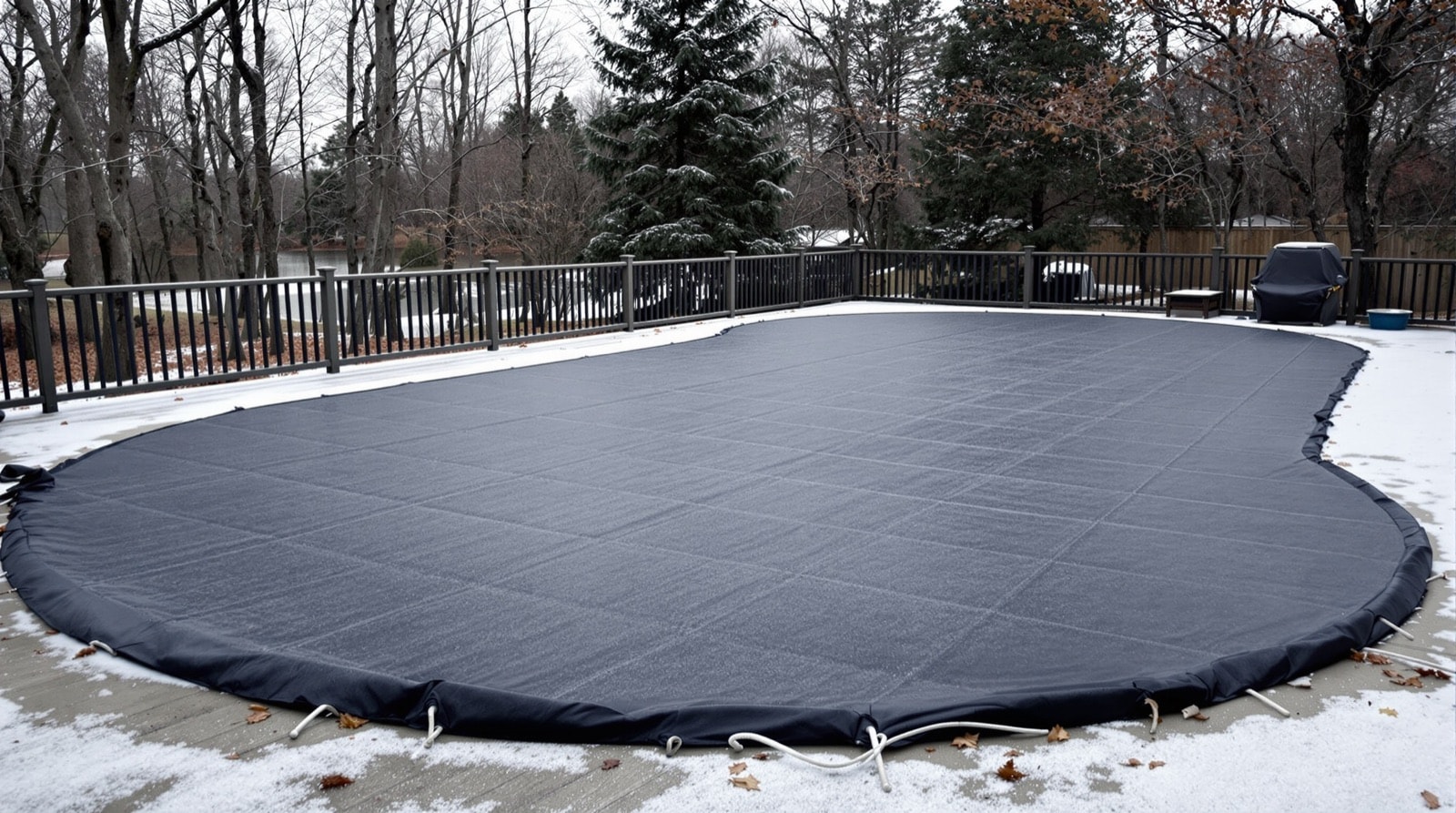
- Fit the winter cover, and secure it properly.
Aboveground pools — skimmer and water level
Aboveground skimmers are usually protected either with a purpose-made skimmer cover plate that seals the opening, or by lowering the water below the skimmer mouth. Lowering the level is the more common approach; drop it just below the skimmer and the return, and no further.
Do not drain an aboveground pool substantially. The water supports the wall. An empty or near-empty aboveground pool can collapse under wind load or under the weight of snow on the cover.
Inground pools — skimmer and water level
Inground skimmers need either a skimmer guard, or a gizzmo screwed into the skimmer throat, or a properly plugged and lowered arrangement. The purpose is the same in each case: to give expanding ice somewhere to go that is not the skimmer body. A cracked skimmer is a common and thoroughly avoidable winter repair.
Lower the water to just below the skimmer mouth and return fittings if that is the method for your pool, and blow out the lines and plug them if your climate requires it. Do not empty an inground vinyl pool. A liner without water behind it can shrink, wrinkle and tear, and in high-water-table conditions an empty pool shell can float.
The cover
- Fit the cover so that it is secure but not drum-tight — it needs a little slack to accommodate the weight of water and snow.
- Keep water pumped off the top of a solid cover through the winter. Standing water is heavy, it is a drowning hazard, and it breeds mosquitoes.
- Check the cover after storms and after heavy snowfall.
- Use a cover pump rather than siphoning where you can; it is safer and faster.
Safety. A winter cover is not a safety cover unless it is specifically designed and installed as one. A standard cover with water on top will not support a child or an animal and is genuinely dangerous. Fencing, gates and supervision remain necessary all winter, not only during the season.
Through the winter
- Check the water level occasionally; a leak does not stop for the winter, and a level that drops below where it should be exposes the liner to freezing and to ultraviolet damage.
- Keep the cover clear of standing water and heavy snow.
- Do not remove the cover for a mid-winter look. Light plus warmth plus six months is exactly how a green spring opening is created.
Before you close, write it down
Note where every plug went, what the closing chemicals were and on what date, the water level you settled on, and the filter's clean starting pressure. It will be six months before anyone thinks about the pool again, and the person opening it — probably you — will have forgotten all of it.
Related: filter cleaning, algae and white water mold, both of which are the usual spring consequences of a hurried close.