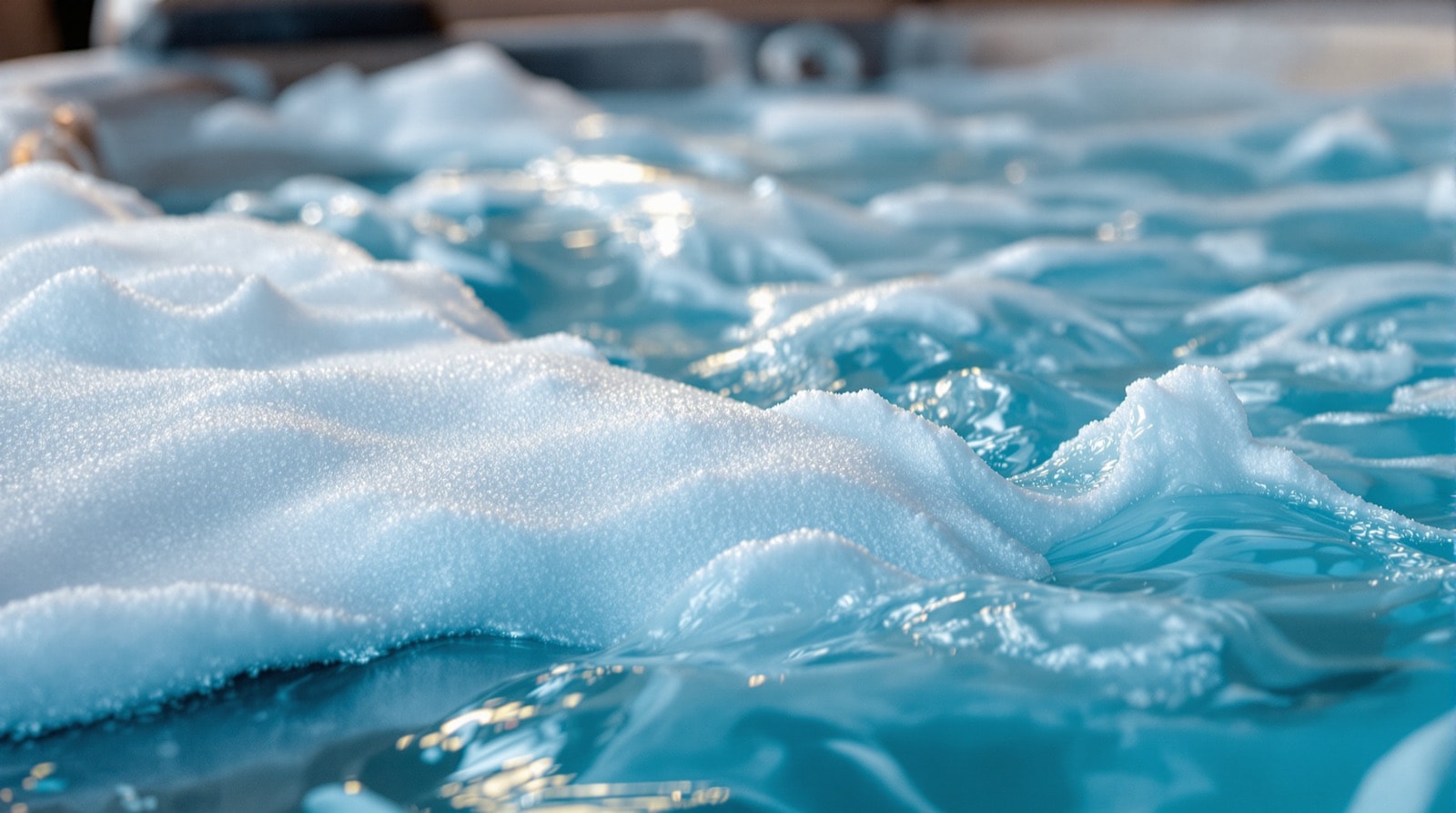
What foam actually is
Foam requires two things: surfactants dissolved in the water, and air driven through it. A spa supplies the air in enormous quantities through its jets and blower. The surfactants are what varies, and they are what you can do something about.
Surfactants are compounds that reduce the surface tension of water so that bubbles persist rather than bursting. Every one of the common sources is something a person carried into the water:
- Detergent residue in swimwear. By a wide margin the most common cause. Laundry detergent and fabric softener remain in the fibres of a swimsuit through normal washing and release into hot water immediately.
- Body lotions, moisturisers, sunscreen and cosmetics.
- Hair products — conditioner, styling products, dry shampoo.
- Deodorant, soap and shower gel residue on skin.
- Drink spills. Anything sugary or alcoholic foams readily.
- Some spa chemicals themselves, particularly certain algicides and clarifiers used at more than the label rate.
The underlying causes
Foam appears when surfactants accumulate faster than they are removed, and there are four ways that happens.
Water that is overdue a change
This is the most common underlying cause. Everything added to a spa stays in it — sanitiser, balancing chemicals, body oils, cosmetics — and the water is never diluted by rain or top-ups the way a pool's is. Once the dissolved-solids load is high enough, foam becomes routine and no amount of treatment will stop it. The water is saturated, and only fresh water fixes saturated water. See the drain-and-refill guidance on hot water care.
Low calcium hardness
Soft water foams far more readily than hard water. If the spa is filled from a softened supply, or from naturally soft water, foam can appear from the very first fill with nothing else wrong at all. Calcium hardness is worth testing whenever foam appears on fresh water — it is the answer surprisingly often, and it is cheap to correct.
A loaded or dirty filter
The filter is what removes the oils and particulates that feed foam. A cartridge that is overdue a rinse or, more importantly, overdue a proper chemical clean is not removing them. A cartridge that has only ever been hosed retains a greasy film that actively contributes.
Sanitiser too low
Sanitiser oxidises organic contamination. Without an adequate residual, organics accumulate rather than being destroyed, and foaming is one of the first visible signs — often before cloudiness appears.
Fixing it properly
- Test the water. Sanitiser, pH, total alkalinity and calcium hardness. Foam on soft water with everything else in range points straight at hardness.
- Ask how old the water is. If it is beyond two to four months, or beyond the volume-and-bathers rule of thumb, stop diagnosing and change it. This resolves most cases outright.
- Clean the filter chemically, not just a rinse. Dry it fully before it goes back.
- Shock the spa to oxidise the accumulated organic load, with the circulation running.
- Correct calcium hardness if it is low.
- Only now use defoamer, and only if the foam is preventing you using the spa in the meantime.
Why defoamer is a last resort
Defoamer works by breaking surface tension at the bubble film, so the foam collapses within seconds. It is genuinely effective at that and it is genuinely useful when guests are arriving in ten minutes.
But it removes nothing. The surfactants remain in the water, the cause is untouched, and the foam returns as soon as the jets run again. Worse, defoamers are themselves organic products that add to the dissolved-solids load and end up in the filter — so repeated use makes the water marginally worse each time and brings the next water change forward. A spa that needs defoamer weekly is a spa telling you to change the water.
Preventing it
- Rinse swimwear in plain water only and let it air dry. No detergent, and no fabric softener at all. This single change eliminates most household foam problems.
- Shower before getting in, and skip lotion and hair product beforehand.
- Keep the filter clean — rinse every few weeks, chemically clean at every water change.
- Hold a consistent sanitiser residual so organics are oxidised as they arrive.
- Keep calcium hardness in range, particularly on a softened supply.
- Change the water on schedule rather than when a problem appears.
- Keep drinks out of the tub, or at least keep sugary and alcoholic ones out.
- Do not exceed label rates on any spa chemical; several foam at high concentration by nature, and in a 400-gallon spa the difference between a correct dose and a doubled one is a capful. The EPA's guidance on pesticide labels explains why those directions are enforceable rather than advisory.
Foam that is not foam
Two things get confused with it. A persistent scum line at the waterline, greasy to the touch, is accumulated body oil rather than foam, and it needs wiping and a filter clean rather than defoamer. Fine white flakes or shreds in the water are not foam at all — that is likely white water mold, which lives in the plumbing and is a completely different problem requiring a completely different response.