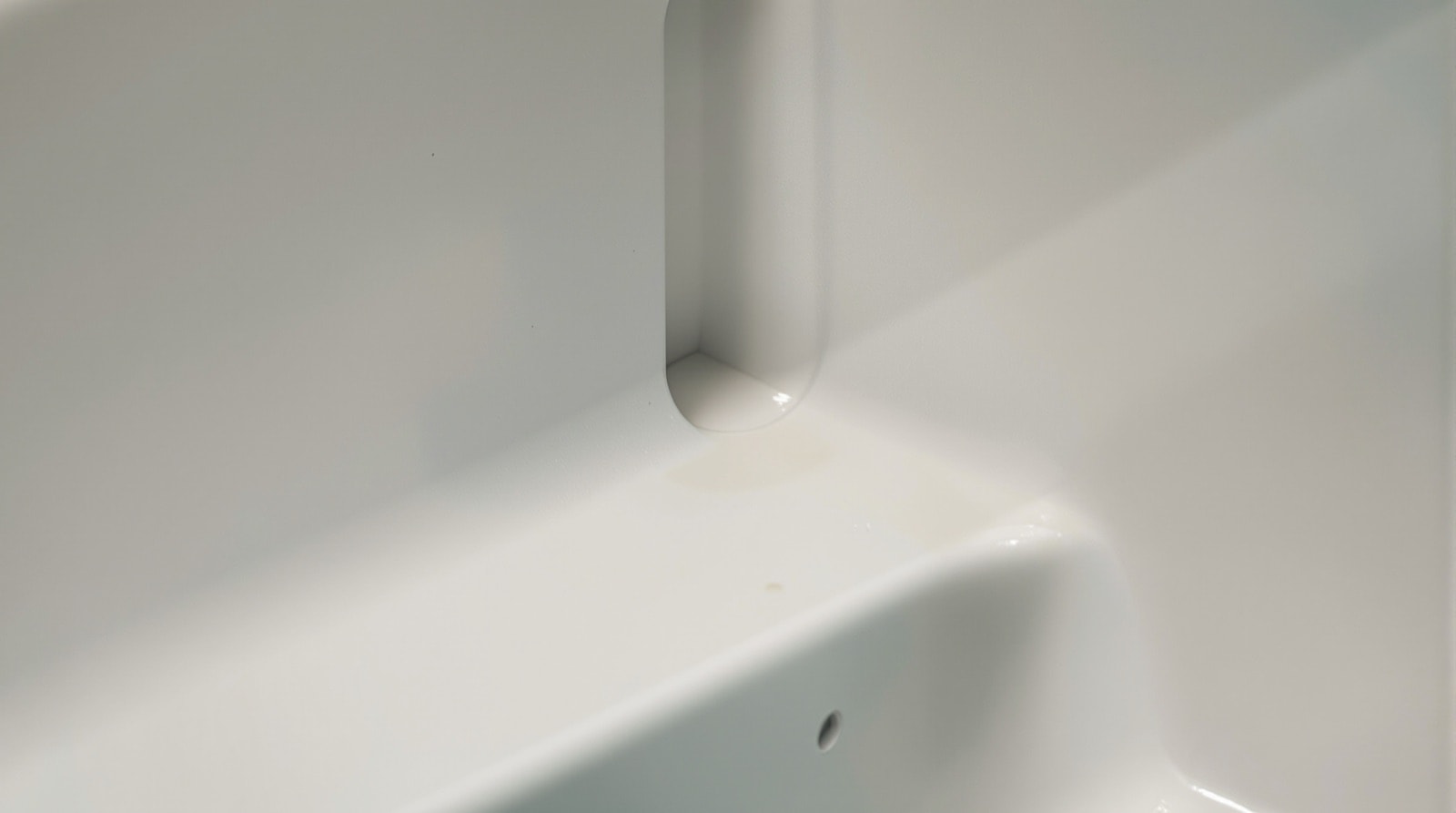
What it is
White water mold is a naturally occurring fungus. It is emphatically not an algae — algae is a plant, and this is not — which is the reason algicide does so little to it.
- It appears as white mucus or tissue-paper-like material, in shreds or clumps.
- It forms a heavy protective coating that gives it an unusually high level of protection, and it is highly resilient against halogen sanitisers — chlorine and bromine — and against non-halogen germicides.
- It can remain a contaminant even after treatment appears to have succeeded.
- It lives on and inside PVC plastics: the interior of pipework, filter housings, jet nozzles, pump bodies and air lines.
- It is very often found together with pink slime, and the two are treated together — see the pink slime page.
The key point: if you can see it on an interior surface of the pool or spa, it is already well established in all of the plumbing lines and, in a spa, in the air blower lines as well. Cleaning what you can see achieves nothing on its own.
Where it grows and why
White water mold prefers exactly the conditions pink slime prefers, and for the same reasons:
- Dark — not exposed to direct sunlight. Inside pipe, inside filter housings, behind fittings.
- Slow-moving water — and this is where intuition misleads. It grows behind jet nozzles and on the back of a pump impeller, places you would assume are the most turbulent in the system. The turbulence is in front of those surfaces; behind them is a permanent eddy.
- Poor maintenance — an inconsistent sanitiser residual, and long idle periods. Spas used infrequently are especially prone, and a pool that sat unused for a season is a classic case.
Prevention
- Physically brush and clean all surfaces weekly, including steps, jet recesses and behind fittings. In a spa, this includes behind the pillows.
- Expose surfaces to sunlight wherever possible.
- Maintain a consistent sanitiser residual. Gaps are what this organism needs, not low averages.
- Run the circulation properly. A spa on a short daily filter cycle, or a pool run four hours a day, has extensive standing water inside its own plumbing for most of every day.
- Do not let a pool or spa sit idle and untreated. If a spa will not be used for weeks, either maintain it or drain it — a warm, wet, untreated, dark plumbing system is close to an incubator.
- Purge the plumbing periodically. In spas especially, a line-flush product before each drain-and-refill removes the film that would otherwise become next season's problem. See hot water care.
Treatment
Because the organism lives in the plumbing, treatment has to reach the plumbing. Surface cleaning alone will fail, and it will fail in a specific and recognisable way: the water clears for a few days and the white shreds return.
- Remove and clean everything removable — baskets, weirs, directional fittings, ladders, steps, toys, floats, cleaner and hose. Anything cracked or porous that cannot be properly disinfected should be replaced.
- Balance the water first, so that the sanitiser you are about to use is actually working.
- Brush all surfaces thoroughly to break the protective coating.
- Shock hard — a full dose for the true volume, delivered at once, with the pump running continuously. Then hold an elevated residual for several days rather than letting it fall back overnight. Duration matters more than peak here.
- Circulate continuously so treated water is passing through every line, and cycle any valves, air blowers, spa jets and secondary circuits so that no branch of the plumbing is bypassed. A closed valve is a refuge.
- Clean the filter chemically, and expect to clean it again. In a bad case the filter media may be worth replacing outright — a cartridge that has hosted this is a permanent reservoir.
- In a spa, purge the lines with a plumbing-flush product, then drain, wipe the shell, refill and re-treat. Spas can be drained; this is the single most decisive advantage they have over pools in this situation.
- Repeat. A second treatment a week later is normal.
Why it fails the first time
Three mistakes account for almost every unsuccessful treatment:
- Shocking once and stopping. A single dose knocks back the exposed material and leaves the protected material intact, which then recolonises. The residual has to be held.
- Leaving equipment untreated. Hoses, cleaners, floats and baskets go straight back in carrying the organism.
- Not cleaning the filter. The filter collects the dead and the living together, and the living carry on.
Is it dangerous?
White water mold is primarily a nuisance and a strong indicator that sanitation has been inadequate — and that second point is what deserves attention. Water that permits this to establish is water that has not been holding a reliable disinfectant residual, and the same conditions favour organisms that matter more. The correct response is to treat the mold and then fix the sanitation regime that allowed it, rather than treating and returning to the same routine.
General public-health guidance on disinfection is set out in the EPA's material on registered disinfectants. Any question about symptoms following exposure to poorly maintained water is a question for a doctor, not for a maintenance guide.